Archives

The Heroes Welcome by Louisa Young

The Impact Remains

The Heroes Welcome by Louisa Young is a powerful historical novel that consumed me from the start. It is the sequel to My Dear I Wanted To Tell You. The books need to be read in numerical order or this book will not have such an emotional impact or connection.

The first book told of the horrors of World War I. This book is set in 1919 as peacetime is now faced. Lives must learn to adapt to what is a ‘new’ normal for them.

Young men returned from war. Some were physically injured. Others left their minds on the battlefields of Europe. “Peter was wounded and crippled by the war as much as any one-legged man.” For some, as soon as they closed their eyes, they were back in the mud and muck of the battlefields. Others, didn’t need to even close their eyes as the battlefields never left. There felt like nothing to live for. Even the love of family and friends couldn’t pull their minds back home. They retreated into whatever dulled the pain.

We learn that “everyone gets damaged by war. You don’t have to be in it to be damaged.” The women who greeted their returning menfolk were also damaged by war. Some tried to inject love and light into their lives. Others ran away – either physically or mentally.

There is the bravery of the couple whose soldier husband had his jaw blown off in France. He is forever physically scarred but makes the decision: “I’m not going to spend my life just surviving the war and my injury. I’m going to live my life.” For him, life is for living.

War is not glorious. “War is your friend’s blood on your face and his dead body in your arms.” And this didn’t just happen once; it happened again and again over a four-year period.

Continue reading
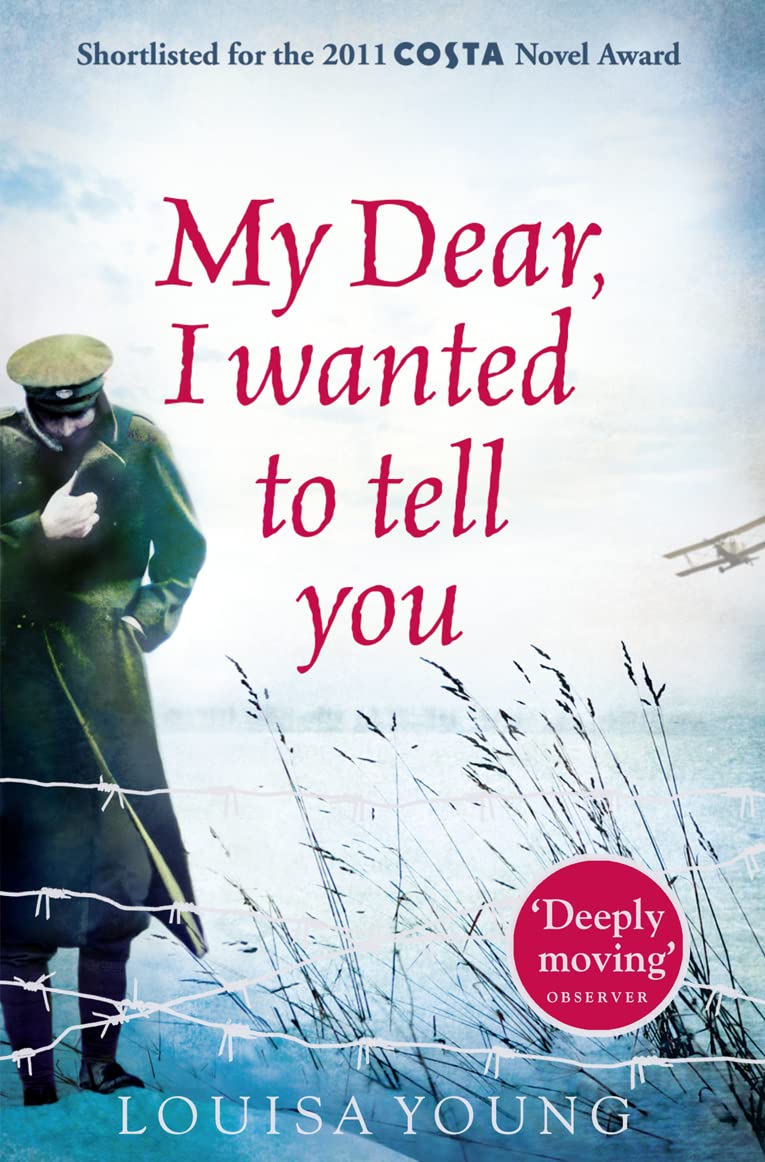
My Dear I Wanted I Wanted To Tell You by Louisa Young

Horrifyingly Powerful – The Futility Of War

My Dear I Wanted To Tell You by Louisa Young is a horrifyingly powerful historical novel that consumed me from the start.

It is set during World War I and perfectly illustrates the futility of war. It is mainly written from a masculine point of view of a soldier, but we also hear of the viewpoints of women too, particularly two nurses and a wife.

World War I was the first ‘modern’ war with tanks, planes and so many horrors on the battlefields. It is the reason why medicine rapidly advanced, especially in the field of plastic surgery and facial reconstruction.

Of the war, a character says: “It can’t go on much longer. Governments will just have to take a look at the hospitals… and they’ll stop.” But governments did not look at the hospitals. Governments didn’t care, and the war went on for another four long years.

Louisa Young has produced a novel that absolutely captures the horrors of war. We see what war does to minds, and to bodies. She does not shy away from descriptions of horrific injuries. Never before have I read such a powerful, graphic description of World War I in a novel. War is not glorious. War is horrific. War is not sanitised as in Hollywood movies, war is dirty. “Flanders had become mud beneath their feet” – and not just mud, but blood and guts too.

We learn that boys went to war and one commented; “I’m so… scared out there every day, every night – and now they’ve made me a… officer.” Boys went to war. They had to walk across No Mans Land or they would be shot by one of their own. 

Boys and men tried various ways to block out the horrors – alcohol, women, or focusing on home – but nothing worked. They numbed their minds in any way they could. “We have horrors, and the worst horror is that before I came away on leave, I no longer saw them. I stopped looking… because I didn’t like what I was seeing.” For some, they found humour in the macabre. “So remaineth these three faith, hope and charity and the greatest of these is a sense of humour.”

Continue reading

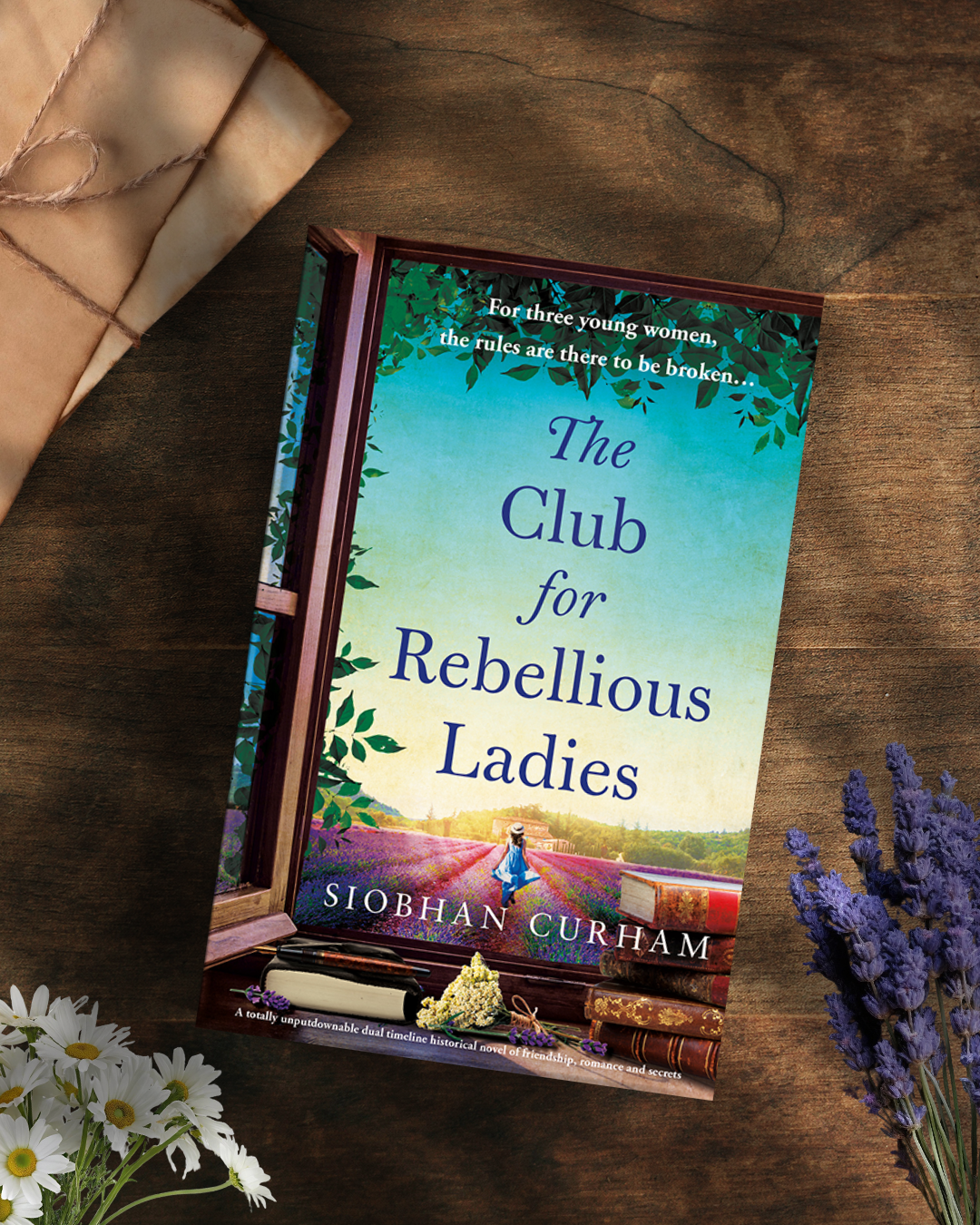
The Club For Rebellious Ladies by Siobhan Curham

Follow Your North Star

The Club For Rebellious Ladies by Siobhan Curham is a powerful dual timeline novel that I absolutely adored.

The action is set-in present-day France, and also towards the end of World War I in 1918 in France. The two time periods are linked by location and family.

We witness family secrets. The silence of those who knew make them complicit in the abuse of a husband to teenage girls living in the school next door in 1918. In present day, descendants are appalled, distancing themselves from their long-dead relatives.

A secret diary is found that uncovers the truth. We learn the tale, along with the present-day characters.

We witness the devastating effects of World War I. Some died, others left their minds on the battlefields of France. “The things I saw in the war, it’s like I can’t escape the memories.”

At the start of the twentieth century, young girls were seen as ornaments and the property of males – first fathers, and then husbands. “Being trained in the art of becoming an ornament rather than a living, dreaming human being.” Girls’ ambitions were squashed. We see a group of girls determined to break free of the mould of society. They wanted to live their lives.

Continue reading

The Life She Forgot by Joanna Davidson Politano

All The Broken Pieces

The Life She Forgot by Joanna Davidson Politano is a powerful dual timeline Christian novel that enthralled me from the start.

The action is set in 1913 and 1947 in a small village in Cornwall.

We learn about love and loss; and memories that sustain us or break us.

There are characters suffering from memory loss – following a trauma the brain protects a character by amnesia. Life before the accident ceases to exist. When snippets of memory return, a character questions the reliability of these memories.

We see that sometimes love means letting go, standing back, and waiting for love to return. “Love is powerful… It can be bent and misshapen and even broken, but it doesn’t simply go away.” When we love unconditionally, we will do whatever it takes in order to protect those we love. “Love means shared moments, limping through the rough patches together.”

Continue reading