Archives

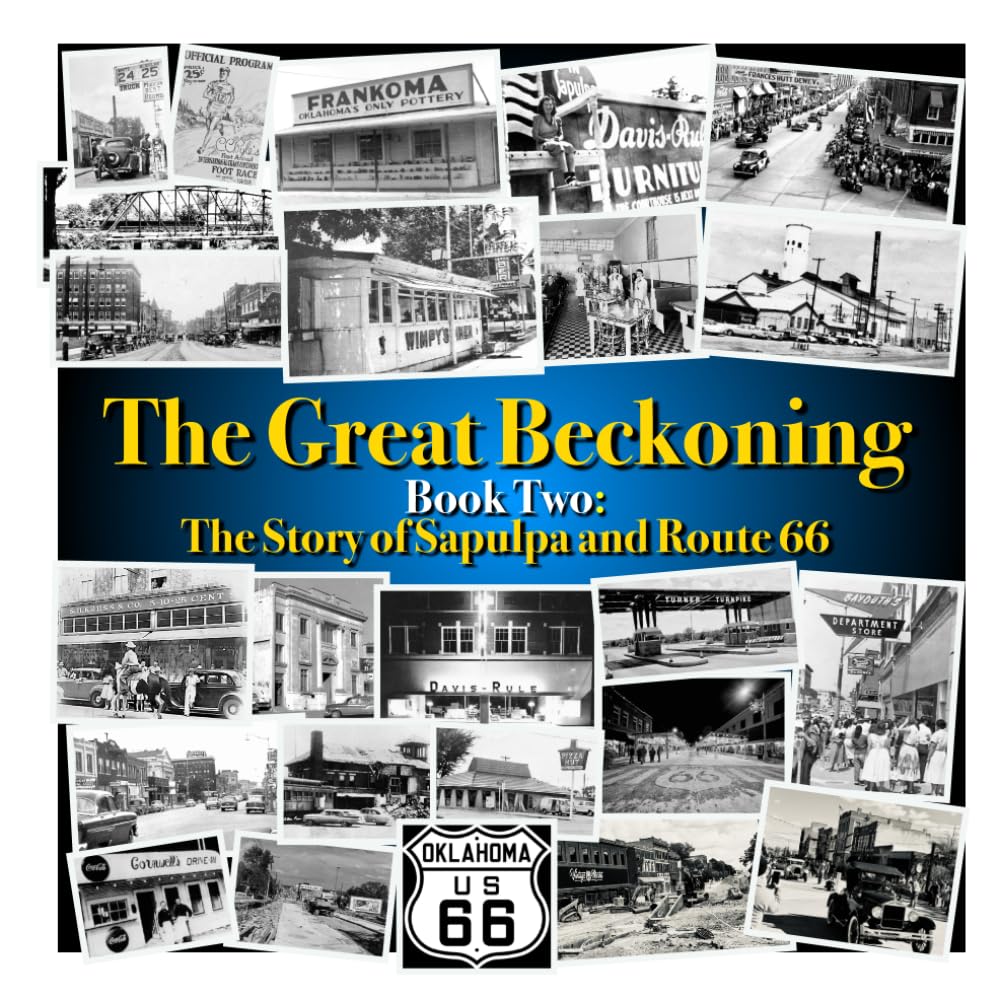
The Story Of Sapulpa & Route 66 by Kirby Lee Davis

The Story Continues

The Story Of  Sapulpa & Route 66  by Kirby Lee Davis is the second book in The Great Beckoning series and published by Sapulpa Historical Society. This continues where book one left off as we follow the development of Sapulpa and the emergence of Route 66, well into the twentieth century.

Route 66 had investments from 1909 and was finally completed in 1928. It stretches from east to west, passing through Sapulpa.

We see the development of roads, going from mud to concrete, tarmac and hard core. The harder your road surface, the more affluent the area.

During the early twentieth century, we witnessed World War I. Following its’ end, over eight million people travelled westwards in search of new opportunities.

As Sapulpa developed, more businesses, diners and festivals sprang up – including a car and a Christmas festival.

Continue reading

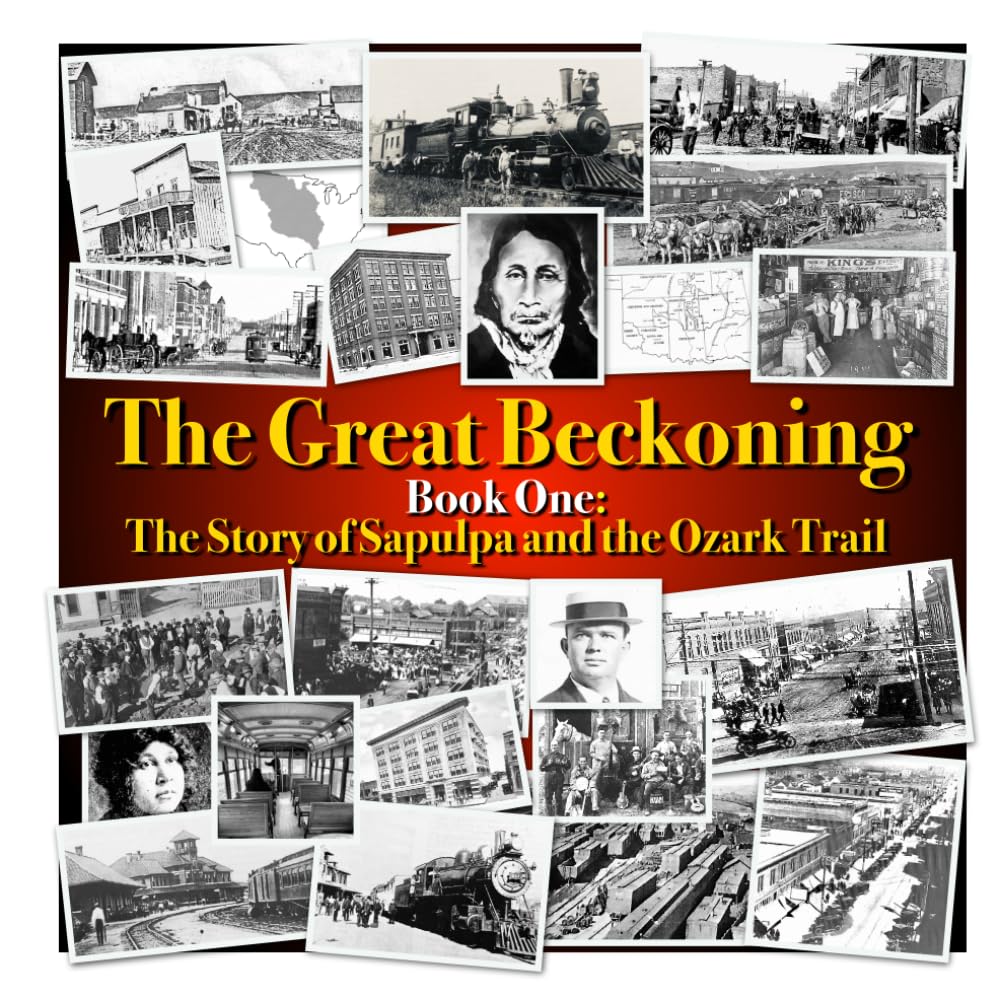
The Story Of Sapulpa & The Ozark Trail by Kirby Lee Davis

A Comprehensive Account

The Story Of  Sapulpa & The Great Ozark Trail by Kirby Lee Davis is the first book in The Great Beckoning series and published by Sapulpa Historical Society. It is a comprehensive account of Sapulpa, a town in America, and the Ozark trail that emerged.

As I live in England, I know very little of American history except for what I studied as part of my degree. I found this book absolutely fascinating.

The story of Sapulpa begins in the early 1800’s but the main focus is on the late nineteenth century until 1928. We hear of the growth of the railroad, followed by that of the motor car. Oklahoma had just 1,100 registered cars and trucks in 1911 rising to 184,212 in 1925. Both vehicles and the railways brought businesses to the area.

During the nineteenth century we saw how the native Americans were pushed out by white settlers. “Oklahoma’s Indian tribes… were the victims of the whites’ insatiable hunger for land.” It was horrifying to hear that the Ku Klux Klan held a rally in Sapulpa in the mid 1920’s.

As well as hearing about the growth of the town and surrounding area, there is also a section about notable businesses. It is interesting to read about the various churches and businesses that set up. I was particularly interested to read about the Harvey House as I had seen the Judy Garland film called The Harvey Girls.

Continue reading

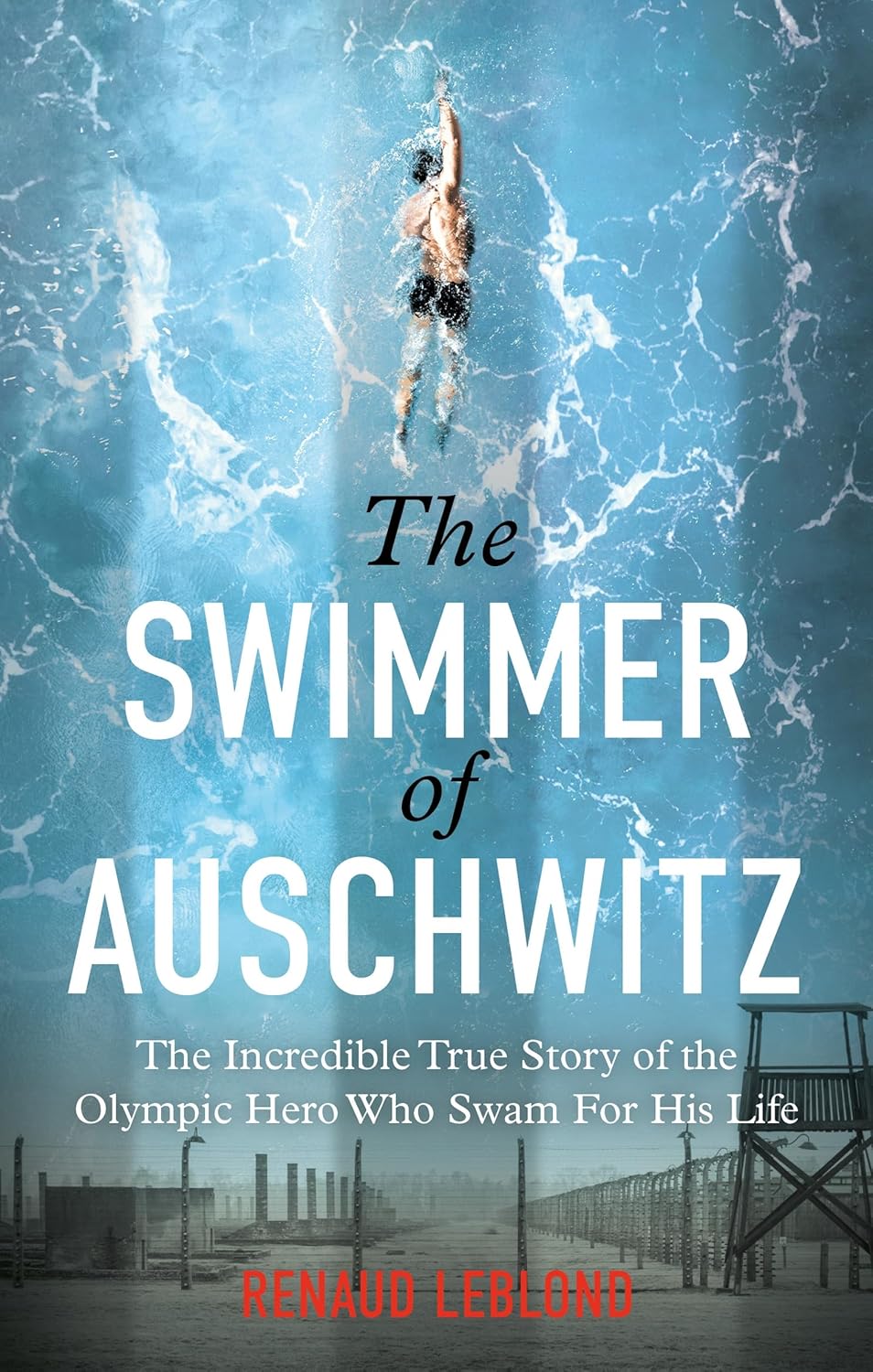
The Swimmer Of Auschwitz by Renaud Leblond

Inspiring

The Swimmer Of Auschwitz by Renaud Leblond is the true story of Olympic swimmer Alfred Nakache who survived Auschwitz.

Alfred Nakache was born in Constantine. It was a cosmopolitan city. “Muslims, Jews, Catholics, all are first and foremost citizens of Constantine.”

As a child he was afraid of water. He overcame this fear and was in the Berlin Olympics in 1936.

The book alternates the time before Auschwitz and while he was in Auschwitz. He was a brave man who inspired others. “Yes to life… Yes to continue believing in it, despite everything.” He always shared what little he had with others. He helped to keep men going. They, in turn, copied him by sharing. “One of us needed to stay alive to one day report what goes on here.” [In Auschwitz].

Continue reading

Franci’s War by Franci Rabinek Epstein

Brave & Resourceful

Franci’s War by Franci Rabinek Epstein is a powerful account of the author’s time spent in various concentration camps during World War II.

We also briefly hear of the author’s background and there is an afterword by her daughter. The inclusion of photos is great to be able to put faces to names.

Although Franci Rabinek Epstein’s family was Jewish, they were not practicing Jews. Indeed, her father said “I am a Czechoslovakian citizen of German nationality.”

As the 1930’s progressed and their liberties were eroded, her father “believed in German decency, justice, honor and civilization.”

Her mother was in the business of haute couture, and the author followed in her footsteps. This was to be of an advantage in the camps as she was able to work as a seamstress. Later the author worked as an electrician (her father’s trade) in the camps. She was resourceful. This plus luck, helped her to survive.

Continue reading