The Torchbearers
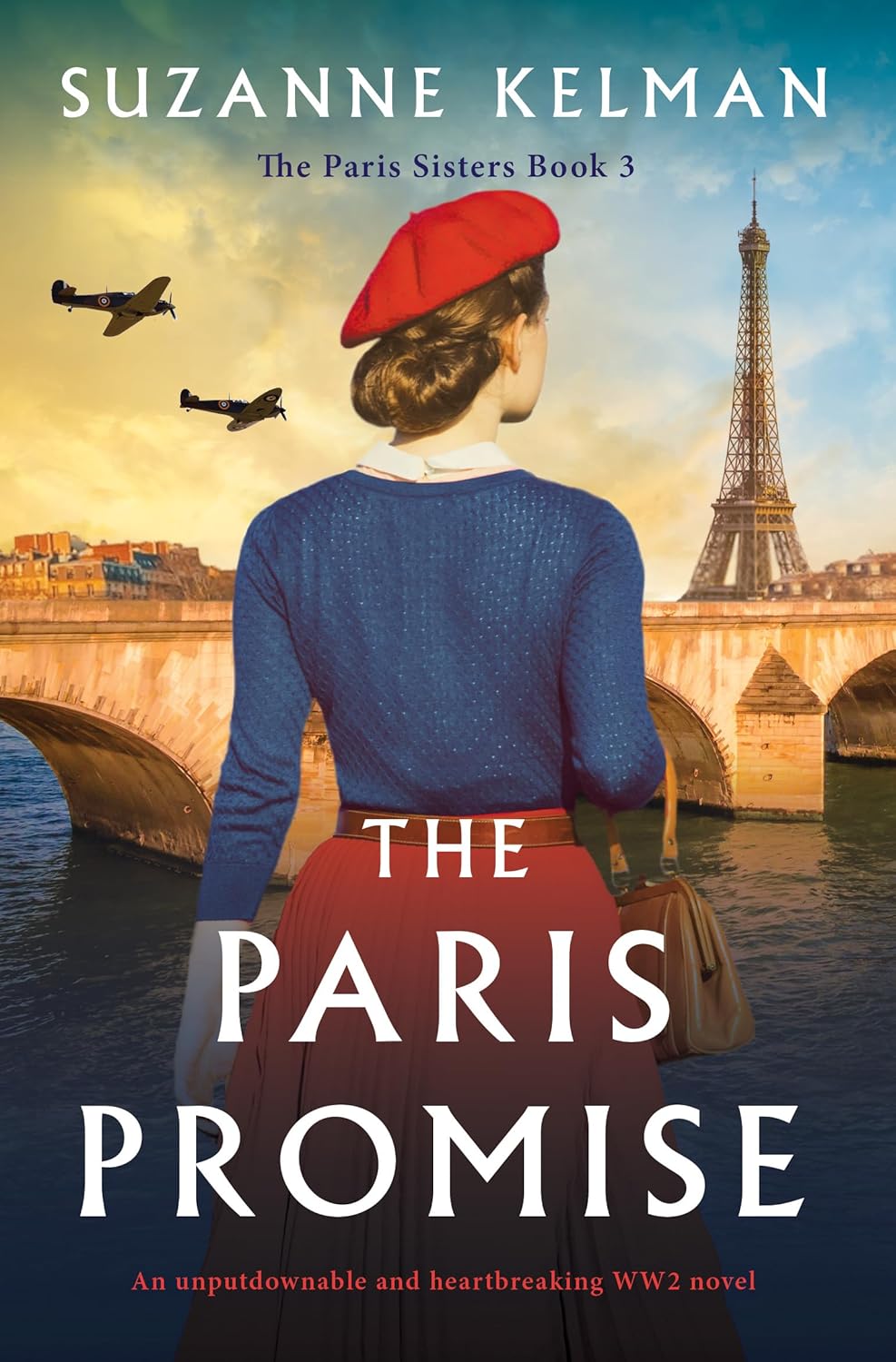
The Paris Promise by Suzanne Kelman is a powerful dual timeline novel that totally consumed me. It is the third book in The Paris Sisters series but can be read as a stand-alone.
The action is set in Paris in 1943 and in England in 2012. We also journey to Brazil in the latter period. The stories are linked by family as a grandmother’s life becomes the focal point of a search.
Life in occupied Paris was hard, and even harder for the Jewish population. A young mother vows to relentlessly search for her Jewish husband. Only the hope of being re-united keeps her going as events push her to the limit.
We see that people did what they did in order to survive. “People made hard choices to survive.” The bravery of a young mother is to be applauded. “We can’t judge the past by our current standings.” The past needs to be viewed with a very different pair of eyes.
A Stradivarius violin links the two timelines as a granddaughter seeks to unite a family with their violin after the Nazis had looted it during the war. What she uncovers is the stuff of nightmares. “The violin wasn’t just an artefact – it was a bridge to her father’s history.”
Brave people of Paris joined the Resistance. “We must join them [Resistance]. We cannot stand idly by while our city is torn apart by hatred and fear.” We learn that even in the darkest of times, beauty can be found. “Amid all the darkness, there was still beauty to be found.”
During the war, people behaved differently. “They had all been ordinary people once, before the war had twisted their lives into something unrecognisable.” The reader admires their bravery.
In war it is easy to lose sight of oneself but “even in the darkest times, there’s always a way to find your own true North.” We all need a focal point so we do not lose sight of the person we really are.
There is much love within the novel. We witness a mother’s sacrificial love. “Sometimes the greatest act of love is knowing when to let go.” As a mother, I just cannot imagine just how anyone could ever let their child go. It is the ultimate act of love – to put your child on a train and to never know if you would see them again. I do not think I would have had the strength to do that.
We see that “it’s [war] stolen a lot from you, but it doesn’t have to define your future.” There were dreadful times in war that haunted characters forever. In order to survive, they must look forwards or drown in the horrors of war.
I thoroughly enjoyed The Paris Promise. It was such a powerful read. It is a book that needs to be read in memory of the six million innocents who perished, and also of the brave people of Paris who stood firm in the face or pure evil.
JULIA WILSON